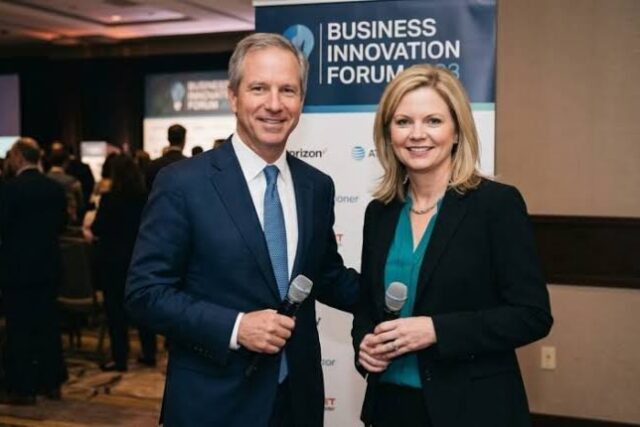
Brian Roberts and Amy Hood are two prominent American corporate executives whose decisions influence the media, technology, and software industries. Although they work for different companies and oversee distinct business operations, both have earned recognition for their financial judgment, long-term planning, and ability to guide large organizations through changing markets. Roberts leads Comcast, a company with extensive interests in broadband, entertainment, broadcasting, and streaming, while Hood serves as Microsoft’s chief financial officer, helping manage the financial priorities of one of the world’s largest technology companies.
Their careers offer an interesting perspective on modern corporate leadership. One executive has helped transform a cable television business into a diversified media and technology organization, while the other has played a central role in managing Microsoft’s financial evolution toward cloud computing and artificial intelligence. Examining their professional backgrounds, responsibilities, leadership approaches, and business priorities helps explain why both names matter in discussions about corporate strategy.
Brian Roberts and Amy Hood: Personal and Professional Information
Brian Roberts and Amy Hood share a reputation for working at the highest levels of American business, but their professional identities are shaped by different responsibilities. Roberts is associated with Comcast’s expansion across communications, television, film, and digital services. His leadership reflects a long-term connection with a company that has undergone substantial changes during his career. Hood, meanwhile, is known for her financial leadership at Microsoft, where investment decisions must support established software products while funding new opportunities in cloud services and artificial intelligence. Their careers demonstrate that executive influence can take different forms, depending on a company’s structure, market position, and strategic objectives.
| Personal Information | Brian L. Roberts | Amy Hood |
|---|---|---|
| Full name | Brian L. Roberts | Amy Hood |
| Nationality | American | American |
| Professional role | Chairman and Co-CEO | Executive Vice President and Chief Financial Officer |
| Primary company | Comcast Corporation | Microsoft Corporation |
| Industry | Media, entertainment, broadband, and technology | Software, cloud computing, and artificial intelligence |
| Main responsibility | Corporate leadership and long-term business strategy | Financial management, capital allocation, and financial planning |
| Known for | Comcast’s expansion and diversification | Microsoft’s financial strategy and investment discipline |
| Leadership focus | Media, connectivity, and business transformation | Cloud growth, profitability, and AI investment |
| Public profile | Senior media and communications executive | Senior technology finance executive |
These details highlight the central difference between their positions. Roberts occupies a broad leadership role that includes the overall direction of a diversified media and communications business. Hood specializes in financial management, helping Microsoft determine how resources should be allocated among its many operations and future growth opportunities. Although their job descriptions differ, both positions require careful evaluation of risk, investment, competition, and long-term business performance. Their influence extends beyond accounting or administration because major corporate decisions often depend on how effectively leaders connect financial resources with strategic goals.
Brian Roberts’ Career and the Transformation of Comcast
Brian Roberts has spent much of his professional life connected to Comcast, making his career closely associated with the company’s development. He became president in 1990, when Comcast’s annual revenue was approximately $657 million. At that stage, the company was considerably smaller than the international media and technology organization it would eventually become. His long association with Comcast gave him an opportunity to participate in its expansion across new markets, services, and business categories. Over time, the company strengthened its position in broadband connectivity, television distribution, entertainment, and other communications services, building a more diversified business model.
The transformation of Comcast illustrates how corporate growth often depends on adapting to changes in consumer behavior and technology. Traditional cable television businesses faced increasing competition from streaming platforms, changing viewing habits, and new ways of delivering entertainment. Comcast responded by developing and expanding its broader portfolio, including Xfinity, NBCUniversal, and Sky. These businesses serve different markets but contribute to the company’s wider presence in connectivity and entertainment. Roberts’ leadership has been associated with this strategic evolution, demonstrating the importance of diversification when an established industry faces disruption. Rather than relying exclusively on its original business, Comcast developed multiple sources of commercial activity.
Amy Hood’s Career and Financial Leadership at Microsoft
Amy Hood has established her reputation through financial leadership at Microsoft, where the chief financial officer plays an important role in shaping investment decisions and maintaining financial discipline. As executive vice president and CFO, she helps oversee financial planning, budgeting, performance evaluation, and capital allocation across a company operating in numerous markets. Microsoft’s business includes productivity software, operating systems, cloud computing, enterprise services, and artificial intelligence. Managing the financial priorities of such a broad organization requires more than monitoring expenses. It involves assessing future opportunities, evaluating business risks, and determining how the company can invest for growth without losing sight of profitability.
Hood’s work has become particularly relevant as Microsoft has expanded its cloud computing operations and invested heavily in artificial intelligence infrastructure. These developments require substantial spending on data centers, computing capacity, networking equipment, and other resources. Financial leaders must evaluate whether such investments can support sustainable revenue growth and create lasting competitive advantages. Hood’s responsibilities therefore connect immediate financial performance with longer-term technological ambitions. Her career also illustrates the growing strategic importance of finance executives in technology companies, where infrastructure spending can influence product development, customer demand, and competitive positioning for years. Sound financial planning helps ensure that innovation is supported by realistic investment priorities.
How Their Leadership Responsibilities Differ
Although Brian Roberts and Amy Hood are often discussed together in comparisons of influential business leaders, their responsibilities are not directly equivalent. Roberts serves as chairman and co-CEO of Comcast, placing him in a broad executive position responsible for the company’s overall direction alongside the other elements of its leadership structure. His role involves evaluating business opportunities, guiding corporate strategy, overseeing major organizational priorities, and responding to changes in the media and communications landscape. Decisions at this level can affect the company’s portfolio, relationships with investors, competitive strategy, and long-term position across several industries.
Hood’s responsibilities are more specifically centered on Microsoft’s financial operations and strategic investment decisions. As CFO, she works within the company’s executive leadership structure to help translate corporate objectives into financial plans. This includes examining spending requirements, managing financial risks, and evaluating how resources should be distributed among established products and emerging technologies. The distinction matters because a CEO-level role and a CFO role involve different forms of accountability, even when both contribute to major corporate decisions. Roberts helps guide an entire enterprise, while Hood provides financial leadership that supports Microsoft’s broader strategy. Both positions require collaboration, sound judgment, and a clear understanding of changing market conditions.
Comcast and Microsoft: Two Different Business Models
Comcast and Microsoft operate in different but increasingly interconnected parts of the modern economy. Comcast combines broadband connectivity, television distribution, entertainment production, broadcasting, and related services. Through businesses such as Xfinity, NBCUniversal, and Sky, the company participates in the delivery and creation of content as well as the infrastructure that connects customers to digital services. Its performance depends on several factors, including customer demand, broadband competition, advertising conditions, entertainment releases, subscription trends, and the continuing evolution of television consumption.
Microsoft has a different commercial foundation, built around software, productivity tools, enterprise technology, cloud services, and AI-related products. Its business serves individuals, companies, developers, and public institutions. Subscription software and cloud platforms give the company opportunities to develop recurring revenue streams, while AI creates additional possibilities for product development and enterprise services. However, these opportunities also bring significant infrastructure requirements and competitive challenges. Comparing the two organizations shows why their leaders must approach business strategy differently. Comcast balances communications and entertainment operations, whereas Microsoft must manage software ecosystems, enterprise relationships, cloud infrastructure, and rapidly developing technologies.
Financial Stewardship and Long-Term Corporate Growth
Financial stewardship involves making decisions that support a company’s long-term health rather than concentrating exclusively on immediate results. For Roberts, this responsibility is connected to Comcast’s diversification, operating performance, investment priorities, and ability to respond to structural changes in the media industry. A diversified company must decide how to support its different businesses while maintaining an appropriate balance between growth, operating costs, and shareholder interests. Decisions involving infrastructure, entertainment production, acquisitions, and digital services can have consequences that extend well beyond a single financial reporting period.
For Hood, financial stewardship involves balancing Microsoft’s considerable growth opportunities with the need for disciplined resource allocation. Technology companies must frequently invest before the full commercial value of a new product or platform becomes clear. Cloud computing and AI infrastructure are examples of areas where capital commitments can be substantial, while customer adoption and returns develop over time. A CFO helps evaluate these decisions through financial forecasts, performance measurements, risk assessments, and investment planning. In both cases, effective stewardship depends on understanding how today’s spending decisions influence tomorrow’s competitive position. Their different industries create different challenges, but both executives must connect strategic ambition with sustainable financial performance.
Stock Performance and the Importance of Context
Microsoft’s stock performance during Amy Hood’s tenure as CFO has attracted attention from investors and business commentators. The supplied information describes a nearly 300% stock surge during her first five years in the role. That figure illustrates the scale of Microsoft’s market appreciation over the period referenced, but it should not be interpreted as a direct measurement of Hood’s individual contribution. Stock prices respond to a wide range of influences, including company earnings, investor expectations, product performance, market conditions, leadership decisions, and broader economic developments. Microsoft’s expansion in cloud computing and its wider business strategy were important elements of the company’s growth story.
Comcast’s development under Roberts provides a different way to examine corporate performance. Its evolution from a much smaller cable operator into a large media and technology group demonstrates the significance of long-term expansion and business diversification. However, a company’s revenue growth does not automatically establish that every strategic decision was successful, nor does it capture the full picture of shareholder returns. Investors must also consider profitability, debt, cash flow, capital expenditure, market valuation, and industry risks. A balanced comparison of the two executives therefore requires more than a single stock-market figure or revenue milestone. It must distinguish company-wide outcomes from the specific contributions of individual leaders.
Artificial Intelligence and the Future of Corporate Investment
Artificial intelligence has become a major strategic priority for technology companies, particularly those operating cloud platforms and enterprise software services. Microsoft is investing in the computing infrastructure needed to support AI applications, model development, and customer demand for advanced digital tools. These investments can involve data centers, specialized processors, networking systems, electricity, and cooling infrastructure. For Amy Hood, the financial challenge is to help ensure that the company’s investment plans remain aligned with expected demand, business priorities, and acceptable levels of risk. The scale of spending makes financial discipline especially important, even when the technology offers substantial potential.
The financial figures associated with AI investment should be treated carefully. The supplied information refers to spending potentially reaching $120 billion by 2026, but that figure should not be presented as a verified final expenditure without a clearly defined reporting period, spending category, and authoritative financial disclosure. Projections can differ depending on whether they measure capital expenditure alone or include a broader range of infrastructure commitments. Nevertheless, the wider trend is clear: AI development is creating significant financial demands for companies competing to provide advanced computing services. Microsoft’s ability to turn infrastructure investment into useful products, customer adoption, and sustainable revenue will be central to evaluating the success of this strategy.
Corporate Governance and Executive Decision-Making
Corporate governance establishes the systems through which companies are directed, monitored, and held accountable. For a large organization such as Comcast, governance involves the responsibilities of the board, executive leadership, internal controls, shareholder communication, and oversight of business risks. Roberts’ position places him within this broader structure, where strategic decisions must be evaluated against corporate objectives and the interests of the organization. Effective governance is especially important for diversified businesses because different divisions may face different commercial pressures, regulatory requirements, and investment needs.
Microsoft’s governance framework similarly supports accountability across a complex international technology business. Hood contributes through financial reporting, internal financial controls, planning, and the evaluation of investment priorities. Her role requires reliable information that enables senior leadership and the board to assess performance and make informed decisions. Strong governance also helps companies communicate financial risks and explain major spending commitments to investors. Neither executive operates independently of these systems, and their achievements should be understood within the broader organizations they help lead. Good corporate leadership combines individual judgment with accountability, collaboration, and transparent decision-making. These principles become particularly important when businesses face rapid technological change or make investments that may take years to deliver meaningful returns.
Challenges Facing Comcast and Microsoft
Comcast faces several challenges associated with changes in how consumers access entertainment and communications services. Traditional television distribution has been affected by streaming competition, while broadband customers have additional options in some markets. Advertising demand can fluctuate with economic conditions, and entertainment businesses must manage production costs, audience preferences, and competition for subscribers. The company must also continue investing in connectivity infrastructure while adapting its products to changing customer expectations. For Roberts, these pressures make strategic flexibility and careful capital allocation important elements of long-term corporate leadership.
Microsoft faces a different collection of risks. Competition in cloud computing remains intense, and AI-related investments create questions about infrastructure costs, future demand, and the pace at which new products generate revenue. The company must also navigate cybersecurity concerns, regulatory scrutiny, technological disruption, and changing expectations among enterprise customers. Rapid innovation can create valuable opportunities, but it can also increase costs and introduce uncertainty. Hood’s financial responsibilities are particularly relevant when investment requirements grow quickly and the expected returns remain dependent on market adoption. Both companies must respond to disruption, although the specific sources of uncertainty differ. Their experiences show why successful executives need to reassess assumptions and adjust plans as markets evolve.
What Business Leaders Can Learn From Their Careers
The careers of Brian Roberts and Amy Hood offer several lessons for people studying business management. One important lesson is that organizational growth requires adaptation. Comcast’s evolution illustrates the value of expanding beyond an original business model when customer needs and technology change. Microsoft’s movement toward cloud computing and AI demonstrates how established technology companies must continue investing in new capabilities even when their existing products remain commercially important. In both cases, long-term strategy involves recognizing that yesterday’s strengths cannot always guarantee tomorrow’s success.
Another lesson is the importance of aligning financial resources with business priorities. Roberts’ broad executive role and Hood’s financial leadership demonstrate different but complementary aspects of corporate decision-making. Companies need strategic direction, but they also need realistic budgets, effective risk management, and a clear understanding of expected returns. Leaders must distinguish attractive opportunities from investments that may not deliver sufficient value. They also need to communicate decisions effectively to employees, investors, and other stakeholders. Ultimately, sustainable growth depends on more than ambition or financial scale. It requires disciplined execution, an understanding of customers, and the willingness to adjust when market conditions change.
Brian Roberts and Amy Hood in the Broader Business Landscape
The professional significance of these executives extends beyond their individual companies because their work reflects two important areas of the modern economy. Roberts operates at the intersection of communications, entertainment, and broadband infrastructure, industries that shape how people access information and consume digital content. Comcast’s broad portfolio means that strategic decisions can influence multiple markets at once. Changes in customer preferences, distribution technologies, and competitive conditions require ongoing attention to both established operations and emerging opportunities.
Hood works at the intersection of finance and technological innovation, where investment decisions help determine how quickly a company can develop and deliver new products. Microsoft’s position in software and cloud computing gives its financial strategy relevance to businesses that rely on digital infrastructure. AI adds another dimension because its development requires significant computing resources and long-term planning. Although Roberts and Hood are not direct counterparts in organizational structure, their careers illustrate how different executive functions contribute to large-scale business transformation. One guides a diversified media and communications enterprise, while the other helps manage the financial foundations of a global technology leader.
Conclusion
Brian Roberts and Amy Hood represent two distinct approaches to executive leadership within major American corporations. Roberts has helped guide Comcast’s development from a comparatively small cable business into a diversified organization with substantial interests in broadband, entertainment, and media. Hood has played a central financial role at Microsoft, helping manage the company’s resources as cloud computing and artificial intelligence become increasingly important to its strategy.
Their responsibilities differ, but both careers highlight the value of long-term planning, disciplined investment, and the ability to respond to technological change. Their professional stories also demonstrate why corporate performance should be evaluated through multiple measures rather than a single revenue milestone or stock-price increase. For anyone interested in business leadership, Brian Roberts and Amy Hood provide useful examples of how strategic direction and financial stewardship can support organizational growth. Their continuing influence will depend on how effectively their companies address competition, investment demands, customer expectations, and the opportunities created by a changing digital economy.
Frequently Asked Questions
1. Who is Brian Roberts?
Brian L. Roberts is the chairman and co-CEO of Comcast Corporation. He is known for his long association with the company and its expansion across media, entertainment, broadband, and technology.
2. Who is Amy Hood?
Amy Hood is Microsoft’s executive vice president and chief financial officer. Her responsibilities include financial planning, budgeting, capital allocation, and supporting the company’s broader business strategy.
3. Do Brian Roberts and Amy Hood work for the same company?
No. Roberts leads Comcast, while Hood serves as CFO of Microsoft. The companies operate in different sectors, although both participate in the broader digital economy.
4. What is the main difference between their executive roles?
Roberts holds a broad corporate leadership position, while Hood specializes in financial leadership. Their responsibilities differ, but both contribute to strategic planning and long-term business performance.
5. Why is Amy Hood important to Microsoft’s AI strategy?
Her financial role helps Microsoft evaluate infrastructure spending, allocate resources, manage financial risks, and assess investment priorities associated with AI and cloud computing.
6. What is Brian Roberts known for at Comcast?
He is known for his long-term leadership and his association with Comcast’s expansion into broadband, entertainment, broadcasting, and international media operations.
7. Are Brian Roberts and Amy Hood business partners?
There is no established business partnership between them based on the information presented here. They lead different companies and can be compared as executives without implying a direct professional relationship.


MOST COMMENTED
Celebrity
Lady Gaga and David Tepper: The Truth Behind Their Connection
Net Worth
Abella Danger Net Worth: Earnings, Career, and Wealth in 2026
Celebrity
Jessica Chastain and Mike Krieger: Are They Connected?
Celebrity
Bill Ackman and Tiger Woods: Wealth, Careers, and Influence
Celebrity
Derek Jeter and Gail Boudreaux: Two Leaders, Two Remarkable Journeys
Celebrity
Jaqui Bonet Rice: Career, Family, and Business Journey
Celebrity
Jake Stormoen Wife: Is the Actor Married in 2026?